
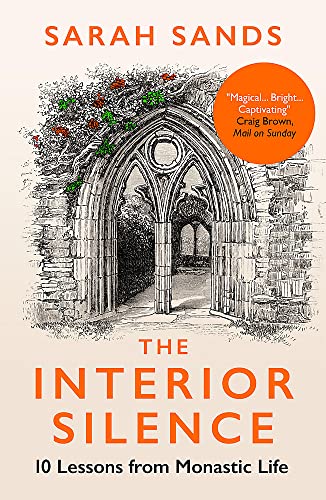
Sarah Sands, former editor of the BBC’s Today programme, is overwhelmed by the constant rush of information and struggles to sleep. She’s tried various methods to slow down and find calm but feels many of them can lead to self-absorption rather than true peace.
Her search takes a gentler turn when she explores the ruins of an old Cistercian abbey in her Norfolk garden. Curious about the monks who once lived there, she delves into their world and gradually discovers how much monastic life might still offer us today.
Monks and nuns have cultivated a deep wisdom about living through work, study, community and the quiet gift of “the interior silence”. This book follows Sands on a thoughtful pilgrimage to ten monasteries worldwide as she seeks this hidden knowledge and the peace it may bring.
Last month, I stepped back from over forty years of full-time ministry across various posts in the Church of England. While feeling a sense of liberation and anticipation of more space to pursue my interests, I faced several challenges. I’d never seen any reason to prune emails and even managed to collect a massive amount of hardcopy paper information – photographs, letters, journals and articles I thought might be useful.
The biggest challenge was downsizing my library! It was difficult to begin but once I got into the swing, I enjoyed passing books to students, selling some that interested others and making choices about what to keep. Now they sit happily in my study, waiting to be read or used in a different way.
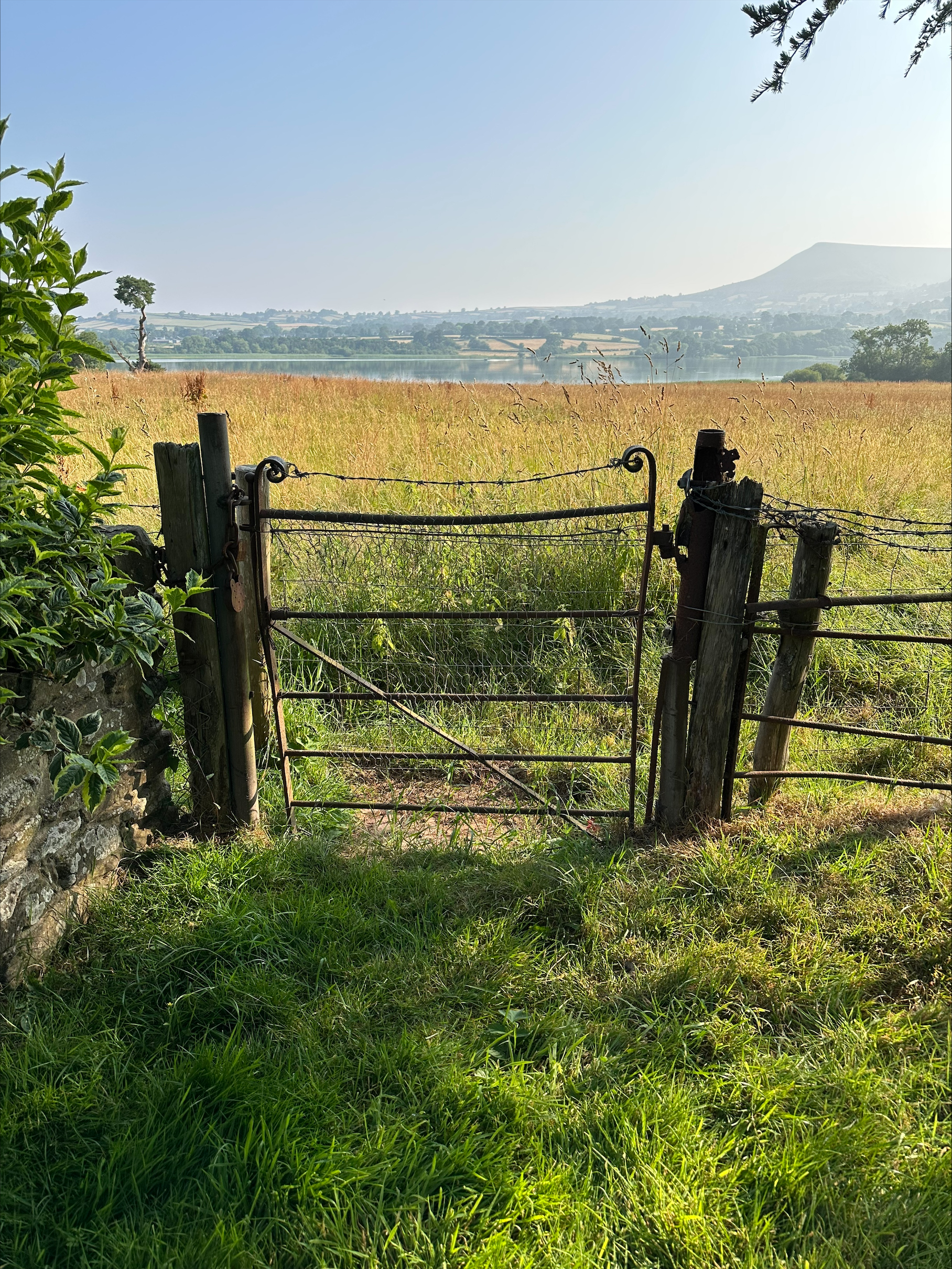
Amidst my desire to focus and embrace simplicity and lighter luggage as I embark on this new season, this particular book unexpectedly landed on my desk as a thank you gift. I took it to a retreat in the Brecon Beacons at Llangasty a place of stillness and persistent silence. You might catch a glimpse of this here of what I’m trying to convey:
This beautiful book excels in every way. The author, a highly successful and accomplished journalist for the BBC, has mastered the art of fluency and crafted prose that is both beautiful and captivating. She has a remarkable ability to transport her readers to different places and reveal her observations. Her descriptive power carries a spiritual quality that resonates deeply.
These chapters delve into her journey away from the demands and pressures of our modern work cultures, which many of us seem to be reluctantly trapped in. We are drawn into her inner world, experiencing her discoveries, vulnerability and honesty about her habits and patterns of behaviour. These aspects are conveyed without drama or intellectualisation, as if the reader is truly present with the writer, glimpsing a glimpse of the wisdom of the Christian spiritual tradition. Certain parts of this narrative possess a mystical quality.
The journey spans the globe, taking her from Japan to Italy, Spain to Egypt, Norfolk, France, England, Austria and Greece. For this reader, it emerges that there is a universal aspect to both human nature and spiritual experiences. As Sands navigates the shifting fortunes of organised or institutional religion, she offers a testament to the universality of our spiritual hearts and longings. Her discovery of centuries-old wisdom and knowledge serves as a reminder to us all of the importance of liberation from functionalism, self-absorption and hyperactivity. This resonates with advice given by a nun many decades ago:
“James, regardless of who we are or where we are in life, every single human being has a spiritual pulse. It is the beating heart of our lives, and we must feel it, follow it and strengthen it.”
My favourite chapter is 8, titled Living on the Edge. Sands transports us to Lindisfarne, introducing us to Cuthbert and Bede, Durham Cathedral and the Lindisfarne Gospels. It was a delightful reminder of the story, but her vivid description of the island transported me back to my first visit as a sixth-form student in 1978. Sitting on the beach’s edge, gazing out over the island, I felt a profound sense of God’s presence and providence. Hard to articulate, but it was here that some of my spiritual awareness truly blossomed. I believe it marked the beginning of my journey into theology and ultimately my ordination at Durham Cathedral in 1985.
Thank you, Sarah Sands, for this wonderful book. I think I read it at the perfect moment and in the ideal setting. It’s a powerful invitation for us all to embrace solitude and explore the wisdom and knowledge offered by those who’ve come before us.
I leave you with the glorious image of the shrine of Saint Cuthbert behind the high altar of Durham Cathedral. of the shrine of Saint Cuthbert behind the high altar of Durham Cathedral.
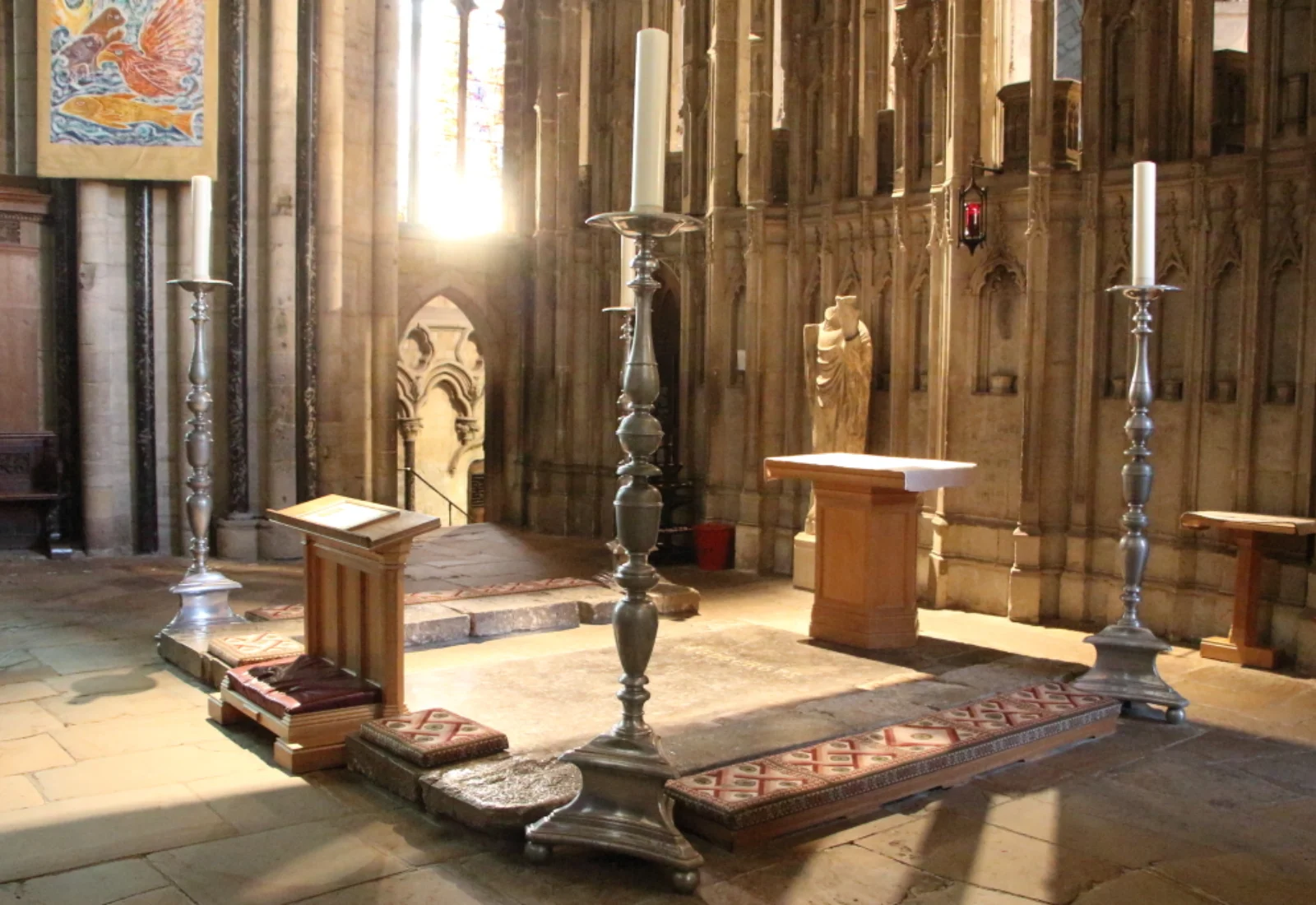
St Cuthbert Pray for Us
Thank you James – I hope you are starting to settle into liffe after Sarum and all that. ONe of the toughest things I found after retiring (or ever) was how to get rid of books, though there are techniques and criteria that help . This book, from what you say, reminds me of parts of Paul Bradshaw’s “Two Ways of Praying” where he contrasts the cathedral and monastic models, with the latter’s approach of balacing periods of solitude, “drawing apart”, and periods of community (meals together and so forth) . I have read and re-read it so many times – I even bought it secondhand in Sarum! It’s one book I cannot imagine my ever letting go. I may buy this one too and see how it compares. As for “liberation from functionalism, self-absorption and hyperactivity”, that recalls parts of Richard Rohr’s thoughts on second-half-of-life in “Falling Upwards”, another bedside favourite of mine. And of course there is always A Kempis! Warmest Steve
Love the gate ( + all photos).