
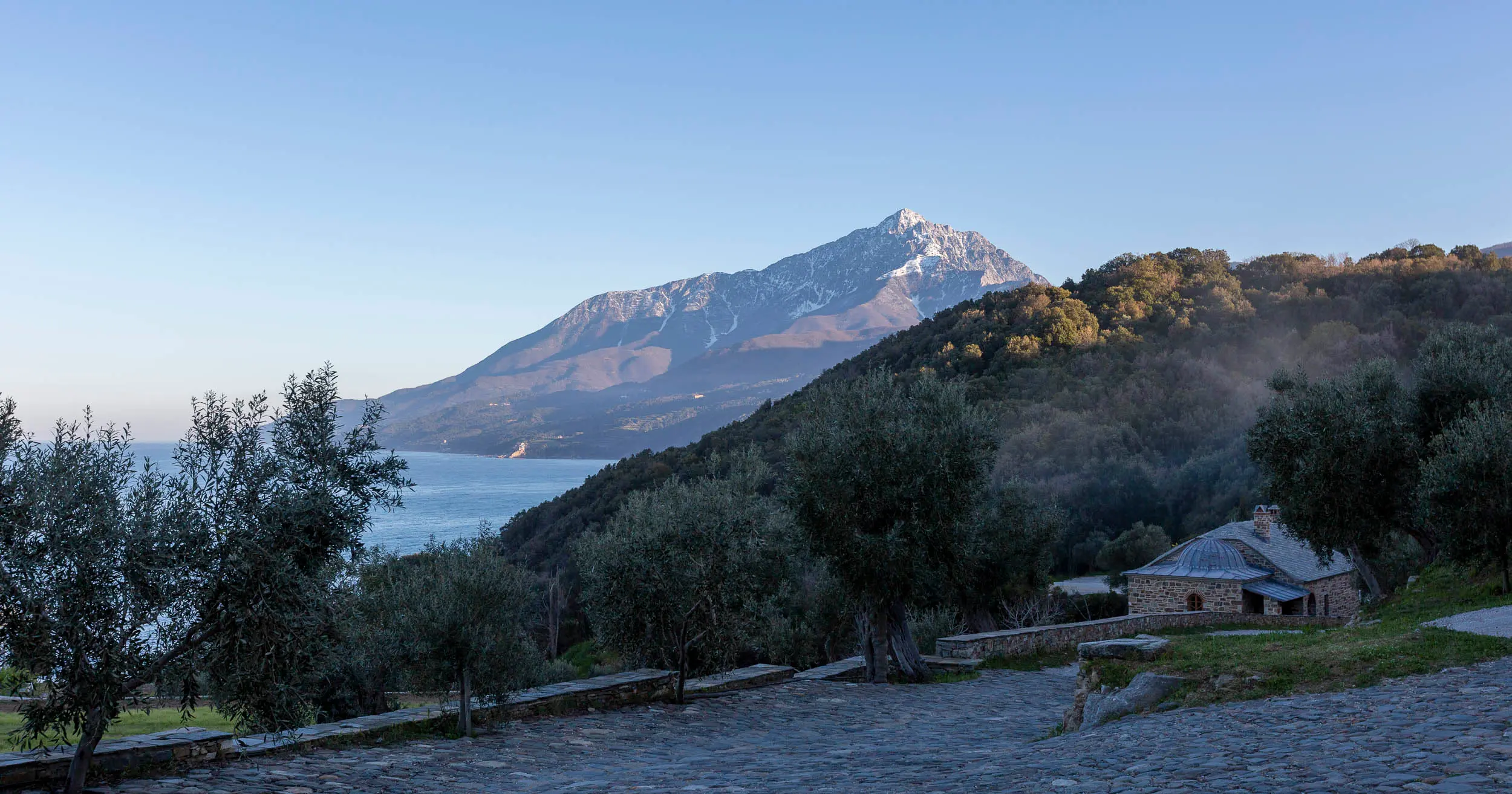
I have been journeying alongside a religious community this Holy Week. Today is that in between time : Holy Saturday as it sits between Good Friday and Easter Sunday. In the Convent, bathed in silence ( though with blustery April wind) preparations are going on in order to get ready for the great festival of the Christian year. The Easter fire is being prepared, the chapel cleaned and choir are practising their music.
I began to search my mind and heart for a homily for the Easter day Eucharist and our renewal of baptismal promises. Slightly distracted, I wondered how religious Netflix might be as I typed in one or two keywords. This film, called simply Athos ( amongst less appealing possibilities) was suggested. It was an extraordinary piece of documentary which captured some of the life on that mountain over 90 minutes carefully edited material.
Athos – A Taste of Heaven (2016) is a documentary which follows the daily lives of monks living on the secluded Greek peninsula of Mount Athos. Directed by Peter Bardehle and Andreas Martin, the film offers a rare opening of the doors of this large community offering a number of monks, hermits and leaders an opportunity to talk about their spiritual life.
It is slow and intentional. We look on. We glimpse the beauty of the place and its spaces. It is not lavish and the monks live simply. At one point we see the monks at work in the high heat of the season. We follow two monks on their arduous journey to the top of a mountain with two struggling mules to help them carry essentials. We listen to the inner struggles of those called to live alone as hermits and their darker moments of facing up to self and life in the light of faith in Christ. We see the community gathering to celebrate Easter. We over hear monks preparing for ordination. The cook issues instructions his apprentices on how to prepare fish and bake them to perfection.
The silence throughout the various scenes of the film invite the viewer into a slower and more intentional contemplation. There is a strange and compelling pace to the scenes that are woven together. The film both manages to set the monastery and its buildings into the wider landscape of this mountain and region as well as focusing in on small details. A hermit on the roof of his Hermitage plastering over the cracks around a window. A monk dusting down a book and finding a corner within which to read. Another monk celebrating a harvest of grapes as he cuts great bunches off ready for processing. A gentle series of questions which are asked of both those who participate in the unfolding rhythm of these days but also those of us who are onlookers.
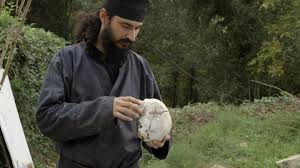
One particular scene left a deep impression on this viewer. It is part of the tradition of this religious community to keep the skulls of departed monks. Death is central to the Christian life. This particular tradition gathers together into one place the skulls of brothers puts at the heart of the life the importance of the remembrance of death.
“They once were where we are now, and we will one day be where they are now”.
Change, mortality, continuity and our human boundedness are pictured here.
The viewer is told that Name remembering is very important in the Orthodox Church. “We (as Christians) should remember our ancestors and mention them in prayer. Everyone should have their family tree. A prayer now for sake of the dead person could help the dead persons soul”
We are bound up together in communion in this world and the next.
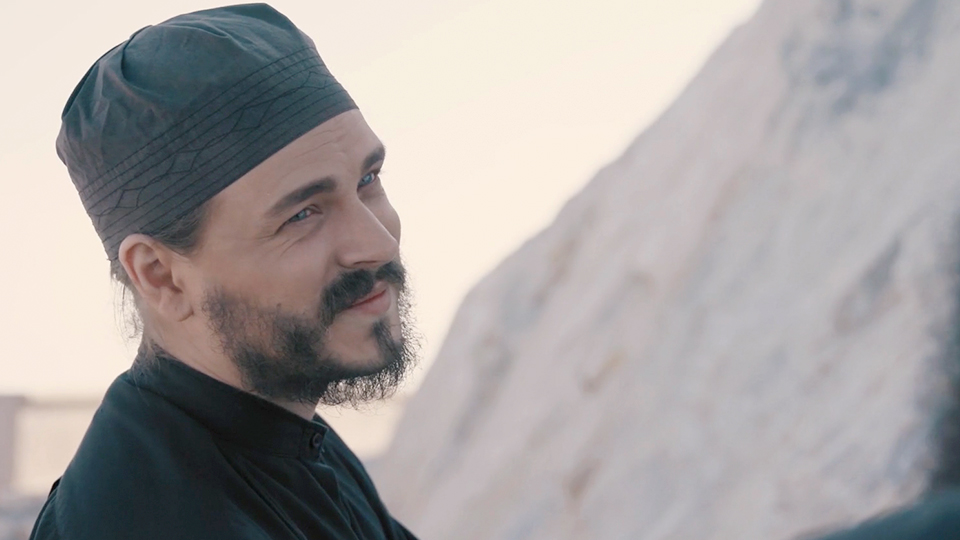
On Mount Athos, silence does not come from the absence of noise — but from the presence of mystery. In this garden death is neither hidden nor denied. It is present. Visible. Accepted. On Mount Athos, we learn death is a teacher. Monks do not flee from the sight of bones — they see them as a daily reminder of the vanity of all things, and a constant call to repentance and vigilance. The skull becomes an inverted icon: not the image of a saint, but the trace of one who fought to become one. It silently says:
“Prepare yourself, brother. You too will reach this stillness. But it is not the end — it is the threshold.”
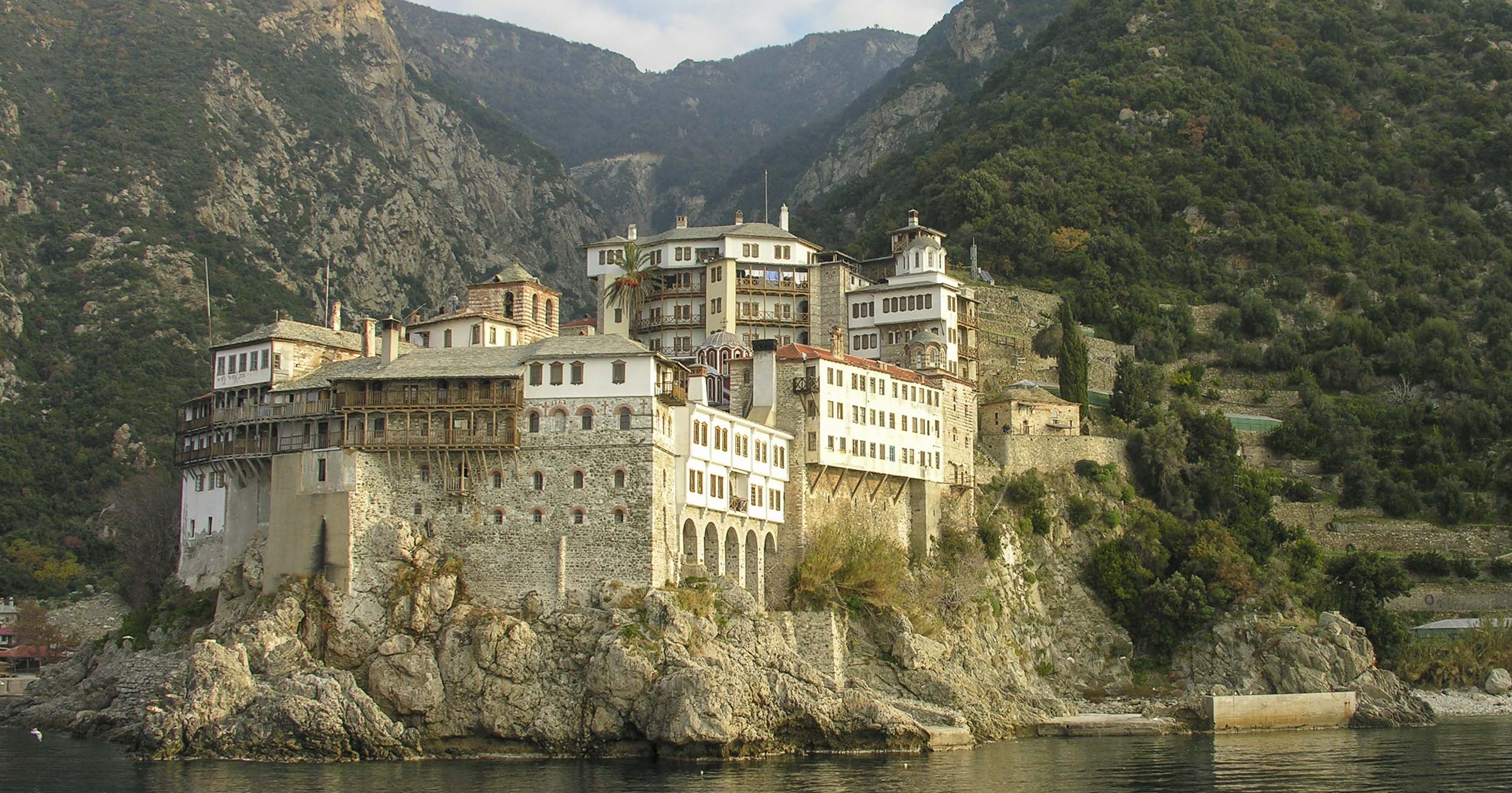
This documentary was a reminder of the immense distraction of much of a modern way of living. While few of us are ever likely to be drawn into this way of life, we have much to learn from it. The pace. The wondering and noticing of others and the world around us. The stillness and silence. The readiness to contemplate the mystery of the Christian faith and its invitation for us to live within the compelling Love of God.
If you find some time then do explore your relationship with silence and attachment through this particular expression of the Christian life. I wonder if I will ever visit this place and pray alongside this community? Now back to a Easter Homily !
Thank you James. A much needed pause for reflection prior to an Easter liturgy and vigil.
Have a happy and blessed Easter.