
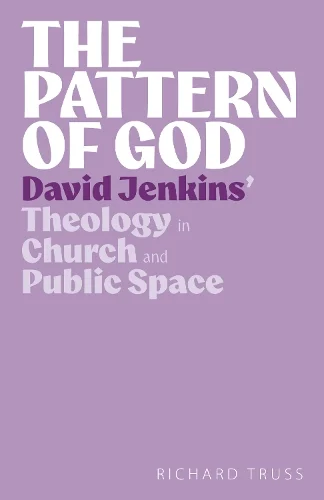
This book was just too personal, relevant and compelling not to engage with. David Jenkins was a fundamental part of my vocational journey. He was real, passionate, theologically lucid and a heartful encourager. Perhaps some autobiography might explain my enthusiasm! I was born in a Durham Mining Village and I’m proud of my hard-working dad who was a pitman first at East Hetton Colliery and then after it closure worked miles under the sea at Easington. The miners strike took place while I was training for ministry in Cambridge. While it was a cause of some amusement and curiosity amongst my fellow ordinands you might imagine I felt that what was happening was simply a matter of life or death.
Thankfully, I survived my formation at theological college though I think I wasn’t entirely sure that they survived me. I was told by at least one tutor and a couple of my fellow ordinands to deal with my anger! I returned to the Diocese of Durham to serve my curacy in Consett which was another place that had suffered from what we were told were inevitable economic consequences of modernity. The one person who spoke out for the geography and people of County Durham was David Jenkins.
He ordained me Deacon in June 1985 and took the preordination retreat which was just sheer adventure into his vision of what the church was and what we were being called into. He was passionate and demonstrated a theological lucidity which I had rarely seen either at university or my own theological college. This was a man if you believed in the power of the gospel and the agency of the Church to build a better world aligned with the kingdom of Jesus Christ.
We kept in touch and occasionally asked him for advice. He was generous and patient with his time- which looking back I think is one of the greatest gifts of ministry. So it is through these eyes that I read this theological study which explores Christology, the Gospel and our imperative to engage with politics and social justice. Truss reminds us of Jenkins’ unsettling and persistent belief that theology must be intelligible to the world.
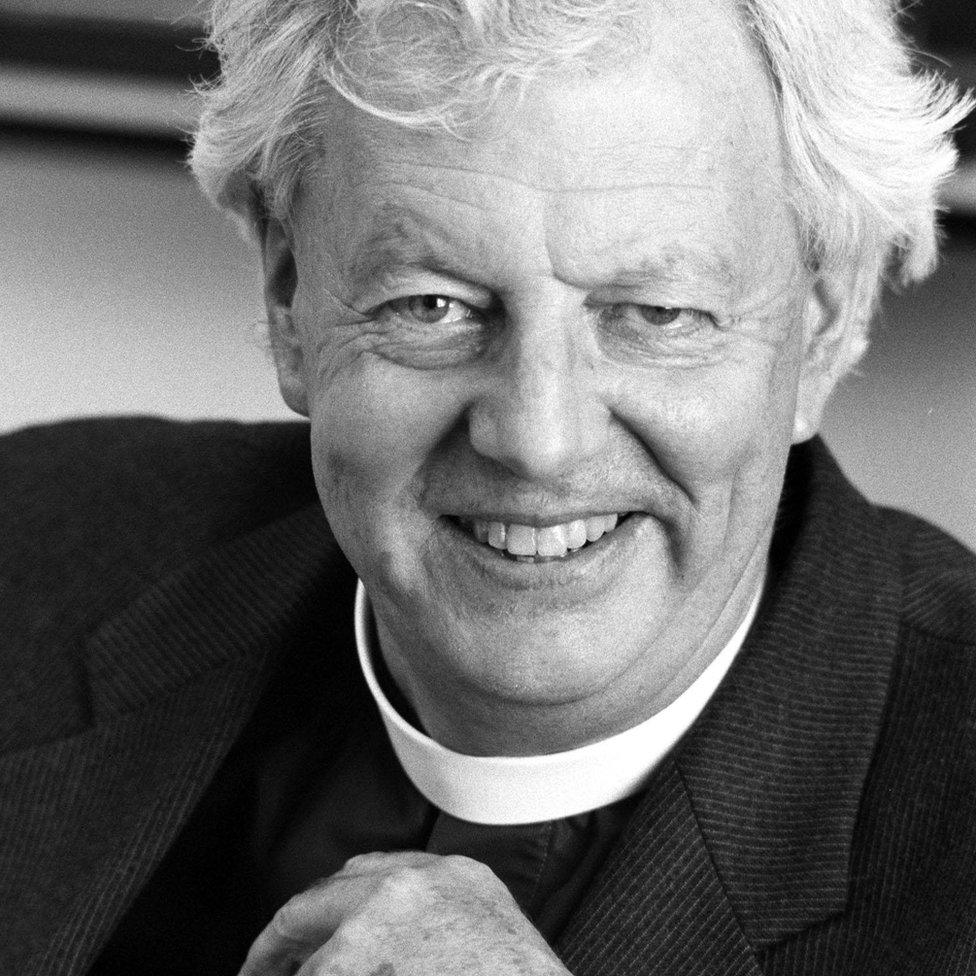
David Jenkins 1984
The book is carefully organised into five chapters.
Chapter 1 reminds the reader of the contribution of Jenkins to Christology through his carefully crafted Bampton lectures. Jenkins explores in the book that was published under the title of The Glory of Man ( SCM Press 1967) what he calls the pattern of of God’s personalness which is embodied in the obedience and service of love shown in Christ. This, he argues, mirrors to us the shape and substance of what it means to be a fully realised human being. I was always captivated by Jenkins use of the word flourishing in relation to our human condition and God’s desire for us to live as human beings fully alive.
He does not shy away from some of the complexities of definitions or the challenges and contradictions in relation to how our faith is lived out. He understands our struggles ! Jenkins sets an early pattern of wisdom, and particularly the complexity of our human life and its rich set of relational interactions.
His deep faith in Jesus and Love as self emptying find shape and story in this early theological work as he holds together the sacred and the secular and the invitation of Christ as God’s question to meet us where we are. There is immediacy here in his belief in what he describes as the pattern of personalness with transcendence in our midst.
Chapter 2 shows his readers that it is not possible to be theologically literate without a firm grasp of history and the development of knowledge and understanding. Christianity is to be understood as a historical faith. It follows that such a faith is ever evolving and so, theology must adapt as it seeks to be true to God. Jenkins articulates a firm conviction that God is continuing to communicate amidst the changes that any historical period of time brings with it.
In this period we are reminded of how widely his theological knowledge was misinterpreted. A number of senior conservative politicians were robust in their criticism of his theology and its social implications. Perhaps this is not surprising considering Jenkins robust defence of the miners in 1984 together with a critique of the work of the national coal board. and some of the tactics of the Miners Union.
Truss charts a number of key influences on the thinking of Jenkins including Karl Popper. I found particularly interesting the use of Donald Winnicott as Jenkins articulates the concept of a structured space in which the experienced world with its history meets the interior imaginative world. This chapter proved for me to be the most lucid and stimulating .
Chapter 3 reminds the reader of Jenkins deep commitment to an incarnational theology which informs his public theology. This is based on a conviction that as we consider transcendence in the midst of our world we understand how the nature of God drives the divine into the totality of the divine work. Both the sacred and the secular are both part of process. The grace oof overflows in all of creation. This is a key part of our Anglican charism. We love the Church and are passionate about Gods World. . Here is a theology in which Church and Society belong together.
A careful reading of the enthronement sermon preached in Durham Cathedral in September 1984 shows Jenkins applying this conviction to the particularities of the mining industry and the geography which he was about to serve with such power and agency. Doctrine which drives one into politics and a shaped by liberation theology is part of the Anglican social tradition.
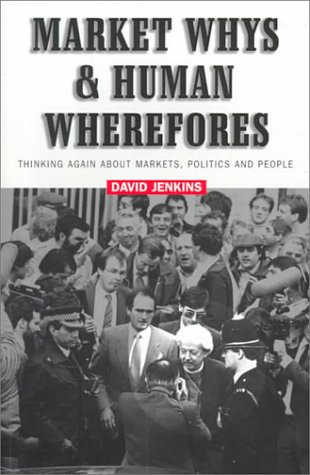
It is also worth noting at this point how revolutionary and original some of the thinking that Jenkins did in relation to applying theology to the market was and continues to be. He writes very persuasively about the power of the market as it shapes human experience and disfigures the common good. Reform and revolution. sharpen the edge of Jenkins radicalism. I think that it is one of his best books
In chapter 4 Truss discusses the ways Jenkins champions what he called an ‘open theology’ which is one which rejoices in and embraces new knowledge. It is deeply suspicious of any kind of fundamentalism simply because it is founded on the desire to control and circumscribe that which can only be partially known and partially grasped. Here we see a theology of risky adventure of exploration. Guaranteed and necessary orthodoxy is not only a myth but a menace rights Jenkins in his book Free to Believe. ( BBC Books 1991).One wonders aloud how this theology would fit within the present quality and constraints of Episcopal leadership with its emphasis on strategy management and growth with some paucity in theological wisdom.
Chapter 5 places Jenkins within contemporary theology as an Anglican theologian firmly rooted in the centrality of the Christian pattern and expressed in a persuasive, personal and passionate way. Jenkins points out the divisiveness of modern Society and its proliferation of injustices, inequalities and insensitivities. All this he argues militates against the realisation of our corporate humanity. This is the theology based upon human diversity and individuality. it is also a spatial metaphor for seeing the way God is at work in people and communities and creation. Jenkins delights in the pattern of transcendence all around us.
While Truss is positive about the important legacy of Jenkins. There may have been further opportunity in this slim volume to pick out some key questions for all of us involved in Church life. To be sure, we are reminded that we will always live on the borderland which is crucial and where the theology must stand. Jenkins also bequeaths us a synthesis of spirituality and theology which translates into both a way of being faithful and practical action.
Some questions for further pondering
I would like to continue to explore why the theology is important and perhaps invite other others into conversation and reflection with me. But here are some of the questions I think we need to ask ourselves that have emerged from my reading of the intellectual legacy of David Jenkins.
I am reminded of these verses from the poet theologian RS Thomas shape these reflections
The word as an idea,
crumbled by their dry
minds in the long sentences
of their chapters, gather dust
in their libraries; a sacrament that,
if not soon swallowed, sticks in the throat.
RS Thomas from The God – Of Theologians
So here are some initial questions :
- Perhaps we need to be much clearer about our motivations and for those of us who are committed to theological work to ask ourselves what it was that drew us into this area of study in the first place? We might also want to name what we believe to be the main concerns of theological enquiry.
- As we reflect on those individuals or places that taught us theology, we might wonder whether theology might have been taught differently. There is no doubt that David Jenkins had a firm foundation of many of the basic elements of theological life and tradition from which to adventure into his particular way of expressing his conviction that theology had a fundamental place to play in Church, social and political life.
- We would do well also to stand back from the sheer relentlessness of much of the work of teaching and supervising to ask ourselves what kind of activity theology is. For those of us involved in research and supervision, I am guessing that there is some wisdom here about what we believe to be generative in theological learning which contributes to flourishing.
- This might require us some self critique. Where, for us, doesn’t theology work? What are its limitations and self preoccupations? How far does the context within which theology is learned and taught shape its content? If theology is to survive in the form that we know it today then how might it change or should change?
- I am presently in the process of disposing of over 40 years of books in preparation for a new phase of life. One of the questions that has intrigued me is what the intellectual map of my journey of learning looks like. I’ve had some interesting choices to make about the small collection of books that I’m going to keep for this next season and which are the writers w or ideas that are sustained me in various seasons of work.
- I continue to be intrigued by what our lives and learning looks like in these post pandemic years. How does theology sustained us in these mysterious and vulnerable making days? I write as we are in a time of deep and destructive world conflicts.
- I wonder what themes or questions might best capture where the future of theology lies ?
- The size, strength and plausibility of theology is linked to perceptions and resources in religious communities, and it is decreasingly likely that such communities are going to want to encourage critical imagination or speculation – this is also a problem for other academic disciplines which are increasingly about producing round pegs to fill round employable holes.
- So maybe this is desirable, as it will ground religious thinking – more important to have an effective compassionate community that delivers than clever words that impress nobody – but it might lead to nothing more than pious utterance and pragmatic action without critical, articulate and challenging vision that discomforts church and society (think David Jenkins).
Work in progress for theology ?
What the work of David Jenkins has focused in this book is that the Church must be committed to nurturing effective and compassionate communities. Vital to that means a theology that is critical, challenging and articulate. This is a theology, for Jenkins and for us, that should provide a vision and a praxis which discomforts both Church and Society.
Work in progress and so watch this space !