
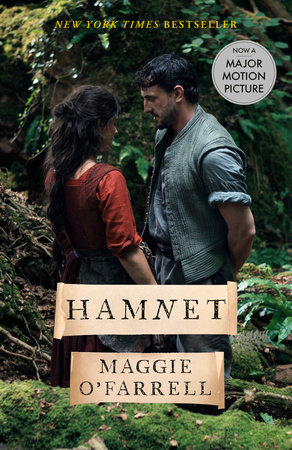
The cinema was surprisingly full on the outskirts of Birmingham. It wasn’t an obvious choice but the timings worked and our group of three arrived just in time. I had not read the reviews but was aware of some of the praise for the adaptation of Maggie O’Farrell’s poetic novel. Others involved in the crafting of this film included the director and co-writer, Chloé Zhao and O’Farrell. Add into the mix the magnetic skill of the actors, Jessie Buckley and Paul Mescal alongside the the genus of William Shakespeare and it’s an impressive start !
At the heart of the film is that the tragic death of Shakespeare’s 11-year-old son – the titular Hamnet – which we see feeds into the writing of the one of the greatest play in the English language, Hamlet. The viewer is reminded that in Elizabethan England the names Hamnet and Hamlet were interchangeable.
It is a slow but powerful love story. Buckley plays a farmer’s daughter named Anne Hathaway, or Agnes as she is addressed by her family. Mescal is a glovemaker’s son and jobbing Latin tutor named Will. There are rumours that Agnes is a daughter of a forest. We see her in the woods with a pet hawk, picking herbs and fungi for her poultices and potions. Will is in his attic, scribbling away at a first draft of Romeo and Juliet,
Agnes is a fierce, earthy rebel who is more honest than anyone else around her. Naturally, the nervous Will is soon smitten, and stammers, “I wish to be hand-fasted to you.” The newlywed Shakespeares start their married life with their daughter Susanna and their twins, Hamnet and Judith. Add to this mix a bullying Father and some quotes from Shakespeare’s plays and a narrative emerges of a hard, relentless search for comfort, fame and security,
The joys of parents are secret, and so are many of their griefs and fears. Some reviewers have reacted strongly to the proposition that we might interpret the beginnings of this play in Shakespeare’s tragedy Hamlet. We note that the films beginning in the anguish of Shakespeare and his wife at the death of their son Hamnet at the age of 11 in 1596, stands at a few years before the play Hamlets first performance.
It could be that this film succeeds, not because it solves the mystery, but because it deepens it still further. And why not some speculation about what might have been behind the genius storytelling of Shakespeare ? I loved its passion and the rawness of it all. It confronted me with my own unresolved losses and vulnerabilities. This story mirrors ours which makes it ingenious and impassioned at the same time. And it is a reminder for all of us of the fragility of life and the unpredictable shape of our days. We need myths and stories to make sense of it all ! And all of this gloriously set within the Warwickshire countryside and town of Stratford,
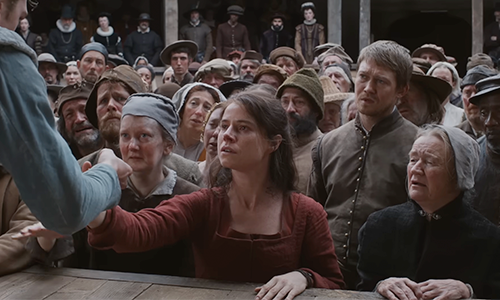
There is a happy ending. Ann sees the play ( we assume in The Globe ) and with Will looking on notices and she sees the connections. But what a journey and what pain …..
Perhaps this film shows us what happens when our hearts are broken and how difficult it is to mend them ! I have often thought in my encounters and pastoral work that unresolved grief especially over the loss of children is one of life’s greatest of burdens. There is so much tragedy and trauma that distorts and disfigures. It can never have the final word but it needs naming and exploring in love and trust.
This film may show us how important it is to hold the space between silence and sorrow. It invites us to consider those things in our own hearts that remain unresolved in a way that only story, cinema and poetry can yield.