
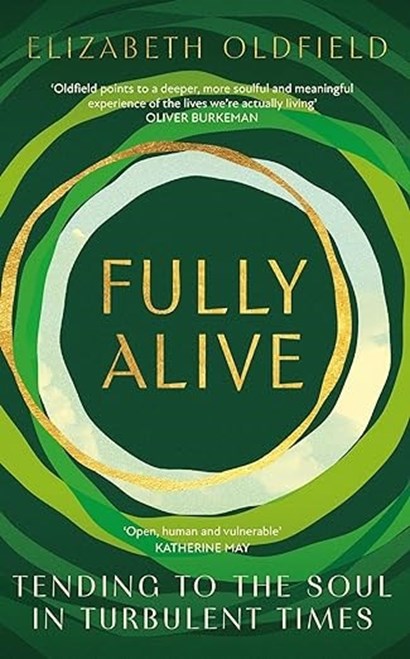
I am all the poorer for having had this book sit on my ‘waiting to read’ pile on the desk for too many months. Some time away in Holy Week has offered the chance to drink from the wisdom in these nine chapters. It is a wise, honest and grounded book.
There are plenty of people around who want to give us ‘advice’ about how to live the good life. Somehow they have ascertained the recipe that can lead us into fulfilment and happiness. And so they tell us …… This book goes deeper and shows the reader more.
It may be an accident or just coincidence , that I picked up this book to read as I was listening to the 6 o’clock news. The noise and descriptions of the frightening chaos of warfare and destruction. We live in unsettling, unstable and even dangerous times. Put this alongside any ordinary life: bringing up a family, keeping focus on the demands of a particular job, making ends meet and squeezing a bit of relaxation and even fun into living and we are bound to wonder what all this might mean. In all of this that can be a few of us who are unsettled by niggling questions and anxieties in this culture of tribalism and division. Oldfield tackles some of these questions head on and ask us to pay attention to what we are becoming and what we might need for a deep life and a firmer foundation which can steady us.
Recent news relating to the piece of research commissioned by the Bible Society which suggested that we are experiencing a quiet revival has undergone some rigorous and devastating critique. From time to time I see shoots of this new life. I continue to be constantly surprised that strangers are ready to open up and trust me with their hopes and fears.
In this I sense a longing, which I see in myself, for meaning, hope and sense. However it is important to name that active Christian faith is at best a minority pursuit, and at worst seen by many as simply absurd. I think it’s also important to articulate some significant conversations that I’ve had recently which suggests that people seem to have lost trust in the Church. I was privileged to be present at the Archbishop of Canterbury’s installation last week and I would want to affirm the possibility of a new chapter at a different sort of leadership, this needs to be held alongside the many who have simply lost trust in the Church or more likely finds who we are and what we do both irrelevant and meaningless.
Oldfield is not blind to this. She invites her reader to go a little deeper and to listen and interrogate their inner lives. She believes that there is good news in the stories of God and a deeper goodness in the wisdom of Christianity. She shows her reader how we might put this to work in building up what she describes as our core spiritual strength.
It is hard to know where to put this book on my well organised shelves with its categories and area of study, Oldfield offers her reader her own biography reflecting her life. This makes is both deeply personal but the uses her learnt wisdom as a springboard to offer direction. In this sense the book acts as a kind of spiritual self-help manual. It also mirrors a rather wonderful sense of the adventure and liberation that comes from taking faith seriously. These pages and chapters take with utmost seriousness some of the difficulties that even the most integrated and honest of us might need to face in order to bring us to life.
So how does Elizabeth do this? Her lens focuses on the seven deadly sins ( and those of you who need reminding) they are wrath, avarice, acedia, envy, gluttony, lust and pride. They are skilfully translated into the concerns and questions and experiences of modern life. They are, however, also the starting point for our understanding and negotiating our inner and out of worlds. Oldfield invites us to notice, to stop and ponder, to listen and to hold together both judgement and understanding. The scaffolding she builds is gentle., invitational, challenging and wise in equal measure. You can feel the way the author wants to lift our spirits, shift our coordinates, and uncover the wisdom in us, around us but especially within the Christian tradition.
She understands how all of us need our phones and iPads, but that they can work powerfully against us in the fracturing of our lives and souls. She invites us in to finding rest, rhythm and steadfastness. She invites us into finding Sabbath and giving attention to the wisdom found in other peoples lives., in scripture, in poetry and the skill of the fiction writer.
What I most loved about this book was the honesty about how difficult it is simply to be a good human being. What a mess we make of stuff! Oldfield will not have us dwell in fear or pity but rather embrace our vulnerability and be honest about the distraction and superficiality of our lives! In this, she proves herself to be a wise map maker. This book offers light and way into faith which can help us to see the extraordinary riches of our Christian inheritance.
Oldfield describes herself as a border stalker. Certainly, we need more people who can inhabit this hinterland a name some of the problems of living faith and building connections. I think reading and understanding the Bible is a bit more complex than she perhaps describes but there are movements of breathtaking intimacy as she opens a window into all kinds of possibilities and new horizons. She shows us what letting go, letting be and being loving might look and feel like for those who want to live differently in their hearts and souls.
Read it, break it open, ponder and scribble and connect. You will not be disappointed.
Fully Alive:Tending to the Soul in Turbulent Times by Elizabeth Oldfield Hodder and Stoughton 2024