

I am grateful to Peter Kevern for drawing my attention to this book while he was teaching here at Sarum College. My search for it in Oxfords’ Blackwells bookshop was worth the effort and time on a Saturday in late November. It is a robost deconstruction of the culture of Higher Education today and deserves to be read by those of us who are passionate about learning. The core thesis is that the bureaucratic and neoliberal structures of academia have turned universities into toxic places of work that is destructive of intellectual freedom and creativity. Its arguments are persuasive.
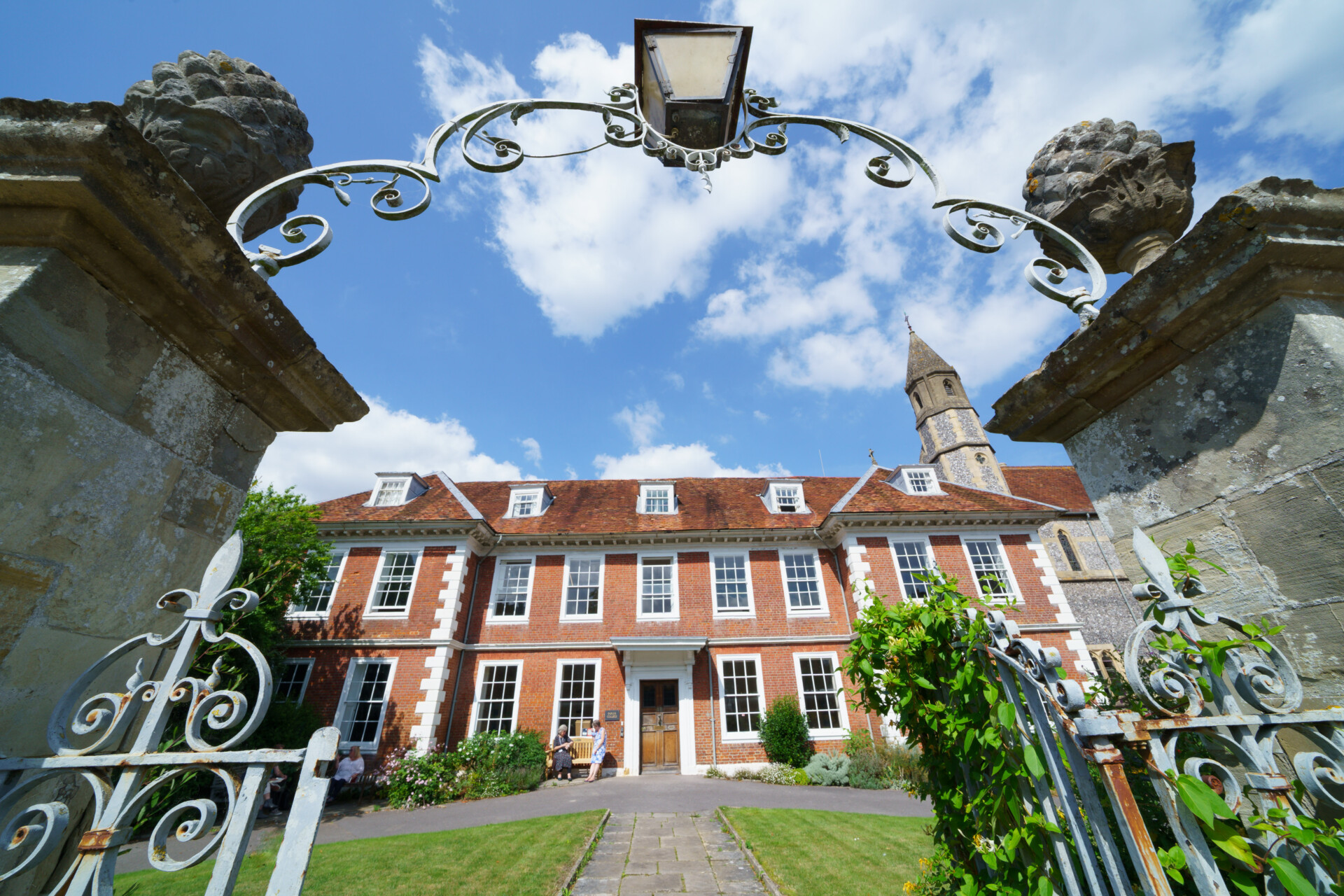
This has stimulated reflection for this reader. Since 2015 I have never had a dull day leading a small centre of theological education and formation. https://www.sarum.ac.uk This book stimulated some fundamental questions about the culture of learning and the future of theology.
Here are some of my initial questions :
How does any ‘place’ nurture a culture of creativity, engagement and excitement about the nurture of learning ?
What are the cultural and economic constraints that limit individuals and groups to flourish ?
Has theology any place in contributing to human flourishing?
What is the relationship between freedom and control?
How is power and agency shared within a set of negotiated and agreed aspirations?
Some of this – though not all of it – is inevitably shaped by the realities of our economic climate and available resources and cash to sustain the academic enterprise. This is also related to the question of what the academic offer looks like and how it is delivered. Do we listen and understand the questions that excite, perplex and motivate people?
As I write this, I think of a number of friends working in different organisations. The places of their work can hardly be described as a sanctuary. The social worker with a heavy case burden negotiating complex needs with limited resources. A small businesswoman who is innovative and hard-working. She has yet to see the results of their investment and arduous long hours recruiting staff, developing the product and marketing it as an attractive offer. A nurse on an elderly care ward living with human frailty and mortality. She is constantly negotiating the complexities of an acute hospital that is making decisions of a priorities day by day. Some of these decisions are often at the expense of her area of passion and work with older adults.
We might want to ask ourselves when we look around in our community and amongst our friends what it is realistic to expect from the workplace and those who lead and manage complexity, conflict and quality.
Some of these experiences and questions are examined by Fleming. He shows his reader multiple stories of despair and despondency drawn from his experience as an academic. He strikes a moderate tone. The examples that he provides to develop his thesis are perplexing. He paints a dark and perplexing picture. He argues that this is not a creative intellectual environment that was promised of academics across both the humanities and sciences.
This book has raised a number of questions which demand further work and reflection. I will touch on some of these issues and ground them in some of my work over the last 30 years or so.
Money, Money, Money

When I left home in County Durham in 1979 to study theology at King’s College London the State paid for those three years in full. I supplemented some of my living costs with occasional part-time jobs especially in the summer but I was and remain thankful for the opportunity that this afforded me. It was life changing in every possible way. If the present financial arrangements had been in place during those years, I would not have been able to have afford this transformative start to my life.
It is, of course naive, to imagine a return to such an economic commitment to fund higher education in this way. It could be that families and communities and society are a good deal more impoverished without this investment. This economic decision has had a far reaching impact on higher education.
It seems evident that it is the humanities subjects that are continuing to suffer as a result of the present economic arrangements for the funding of higher education. This is particularly true for my own subject, theology, and religion, with a number of departments closing across the country with probably more to come.
The British Academy warned about the decline of theology in 2019 https://www.thebritishacademy.ac.uk/news/theology-and-religious-studies-risk-disappearing-our-universities-says-british-academy/ without much effect. One theologian offered this warning :
“Despite the rise of secularism in the West, religion continues to play a dominant role on the world stage. Religious extremism, religion-infused nationalism, and tension between religious communities are just some of the many challenges we face today. Religion is more, not less, relevant than ever before, and the study of it should reflect this. As an academic community, we must strive to ensure that our Theology and Religious Studies reflect the world they seek to explain.”
It seems likely that the number of departments will continue to decline. I wonder how we might support and facilitate a broader conversation about the place of high education in the fabric of our Society and our shared commitment to fund such provision through taxation, philanthropic support and businesses investing in a new generation of citizens and change makers.
Managing the Business

In 1990 I left a post in Oxford to move to the Midlands to work in hospital chaplaincy. It coincided with another phase of NHS reforms and the introduction of what commentators called general management. All of this was largely ‘packaged’ as a commitment to an improvement in patient care. Hospitals were merged, administrators were replaced with managers and a whole new language of performance, targets and efficiencies were introduced. This was delivered under the banner of a commitment to promoting health and serving the patient.
I believe that most of this was largely effective. Our chaplaincy department increased its resources. We worked more closely with professions allied to medicine. Staff were glad to be supported by our ecumenical and multi-faith team. It was ground breaking and a reminder to me that people were much less ambivalent to religion that we sometimes imagine! Chaplains acquired a stronger approach and ‘language’ in their commitment to spiritual care. Many developed this by working collaboratively across professional boundaries.
There were casualties in these organisational changes but from albeit to my rather limited perspective, I saw a strengthening of both purpose and identity of the delivery of health. I admired the way in which regional health management was planning for the future. Aligned as these acute hospitals were in South Birmingham with neighbouring universities, particularly the University of Birmingham I experienced the importance of education and learning in sustaining and saving human life. Management, corporate accountability, and economics sustainability were part of the multidisciplinary collaboration to serve the health needs of the West Midlands population.
These changes were and continue to be contested. ( see the work of the Kings Fund – https://www.kingsfund.org.uk/insight-and-analysis/long-reads/health-and-social-care-england-myths ) One might argue that higher education as been protected for too long. In this sense Fleming fails to put some of his thesis into a wider social and economic climate especially in these post pandemic years.
I do have some sympathy with the necessity of bureaucracy if it empowers individuals and groups to do their work well within an agreed purposeful agenda. There are always mistakes and there may be some very problematic managers but work and business needs management. Why should Higher Education be protected from working with agreed aims, targets and deliverables?
Freedom or Control ? Can there be freedom without control ?
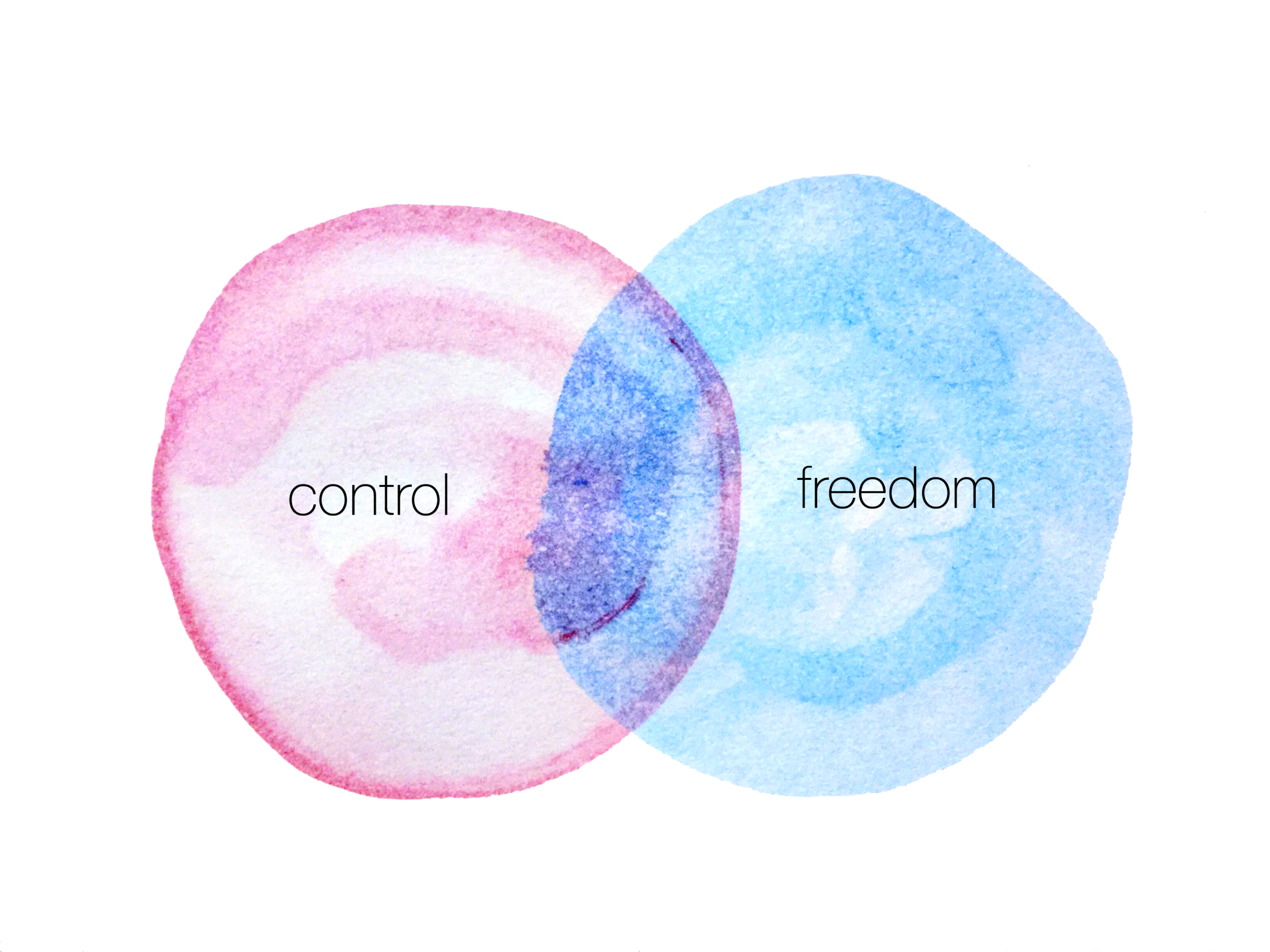
In any academic institution, its culture needs to nurture trust. Employees need to understand the complexities of the market and the persistent constraint on finance. Gone are the days where universities offer complete freedom to write books, discuss esoteric topics and contemplate complex problems. In this digital age we can no longer lead sheltered lives in some kind of denial about the economic, social and cultural realities that beset so much of modern living.
Perhaps we need a more nuanced and ‘grown-up’ embrace of some of the contradictions and ambiguities that lie between freedom and control. We are all quite accomplished at ‘othering’ people. A healthy discussion of public management, capital theory and public choice should undergird what we believe the place of education should be in today’s Society. For any organisation to work well there needs to be a measure of bureaucracy.
Few institutions of education can escape from the imperative to ensure that there is a further measure of appropriate commercialisation. I am not sure whether it is possible ( or desirable) for us to turn the tide into a space where unfettered freedom is the right of those who have such skill and expertise in their own academic arena.
Certainly a commitment to understanding some of the paradoxes and complexities of the state of education in the UK today might help us have a different and more constructive conversation about a place of learning and research in a liberal democracy. Blaming others, especially the managers might offer temporary satisfication, but it does not take us into a new chapter for generative learning for the common good.
It might be wise for all of us involved in learning to consider how commercialisation can enable us to support research and nurture learning. We shall need to adddress some of the power imbalances between those who wish to control (the managers) and those who wish to protect their freedom ( the academics).
In this sense Fleming invites his reader to consider the roots of what is wrong in order for us to understand what might be sensibly different. It is also a reminder of our shared responsibility to ensure that those working in education are encouraged, affirmed and valued in the important work they do. Whether it is possible to create an ecology which is liberated from capitalist oppression is a challenge which deserves more public debate.
Bound up with us is our addiction to elitism, privilege and entitlement. Fleming shows his reader how to deconstructed ask key questions. In this book there will be many that are heard and affirmed in their sense of the experience of the psychological traumas of capitalism. There are however many other groups, apart from those called to the academic life ,who are subject to capitalism and its powerful oppressions.
We need to be careful what we protect and who we are protecting in this and wonder what it might mean to make to build healthy and productive places of learning.
Building new partnerships and cultures for learning
As my Christmas break moves all too quickly towards a new term and a new year I take into my work this thesis and its lively and sometimes disturbing narrative. I believe there is a place for learning spaces like Sarum College. There is some significant work to be done around reimagining more structural solutions for creating space for exchange within learning.
Whether it is possible to deal with the siloisation I have encountered ( particularly in the Church of England) remains to be seen. Some of this is tied into the architecture of funding but it’s deeper roots can be found in a functional and mechanistic approach to what learning looks and feels like.
This deserves further reflection and conversations to take place across boundaries and cultures and disciplines. As a new year turns I hope we might be able to continue to pick up the questions, stories and warnings that Fleming articulates here.
I am confident that Sarum College has a place in recalibrating an ecology of learning where theology has a place in the nurture of wisdom for change and well being.
Glad you found the book so stimulating James! I think that theology, certainly Christian theology, is finished in academia: what’s left is increasingly niche and only eccentrically related to the life of Christian communities. So theology needs to be done differently, and we may need to let go of the shiny academic prizes that draw us. People like me need to do it for love (i.e for free) and find community-based ways if theology is to continue to thrive.
I’m more with Fleming than with you regarding the rise of managerialism in HE. As he points out, the managerial caste is made up largely of failed academics with little training. In my experience, they’re applying managerial models that were discredited in the ’90s, with little insight. Hope we can talk more in due course. P
Thank you, James, for this thoughtful and searching piece. Your questions about the future of theology in academic research and teaching resonate deeply. Where I think I may differ from you is in how we diagnose the current culture of higher education. I find myself more persuaded by Fleming’s account of the rise of managerialism, and by Stefan Collini’s earlier warnings (https://www.lrb.co.uk/the-paper/v35/n20/stefan-collini/sold-out and https://www.lrb.co.uk/the-paper/v38/n02/stefan-collini/who-are-the-spongers-now), than by the hope that the new reality can simply be harnessed for good. Reading Collini’s What Are Universities For? and Speaking of Universities during the reforms of the early 2010s shaped my sense that something more fundamental has shifted: universities have increasingly been recast through market logic, with students imagined as consumers and knowledge as a commodity. On that reading, the expansion of metrics and managerial layers is not simply neutral management gone wrong, but part of a deeper redefinition of purpose. This is why so many academics experience contemporary universities as places where critical inquiry and the intrinsic value of learning are squeezed. I share your desire to imagine spaces like Sarum as sites of wisdom and formation, but I think Fleming and Collini help us to see just how far the system has moved, and why theology’s future may depend on resisting — not merely adapting to — this managerial turn.