
A new season has offered both gifting opportunities but also some challenges. It has not been easy to let go of pre-loved ‘stuff ‘ especially my collection of Art. This has gifted me some space to reflect on the gift of art, the generative skill of artists and what has brought me to life over these years.
I have written on this blog about Frost and O’Casey and how in different ways they excite the spiritual imagination.
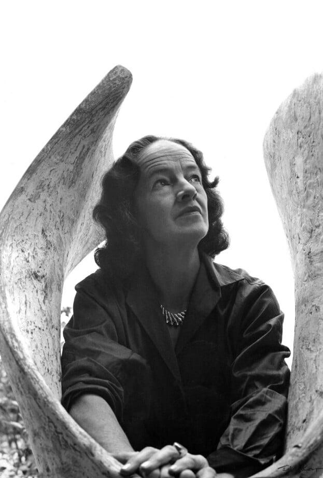
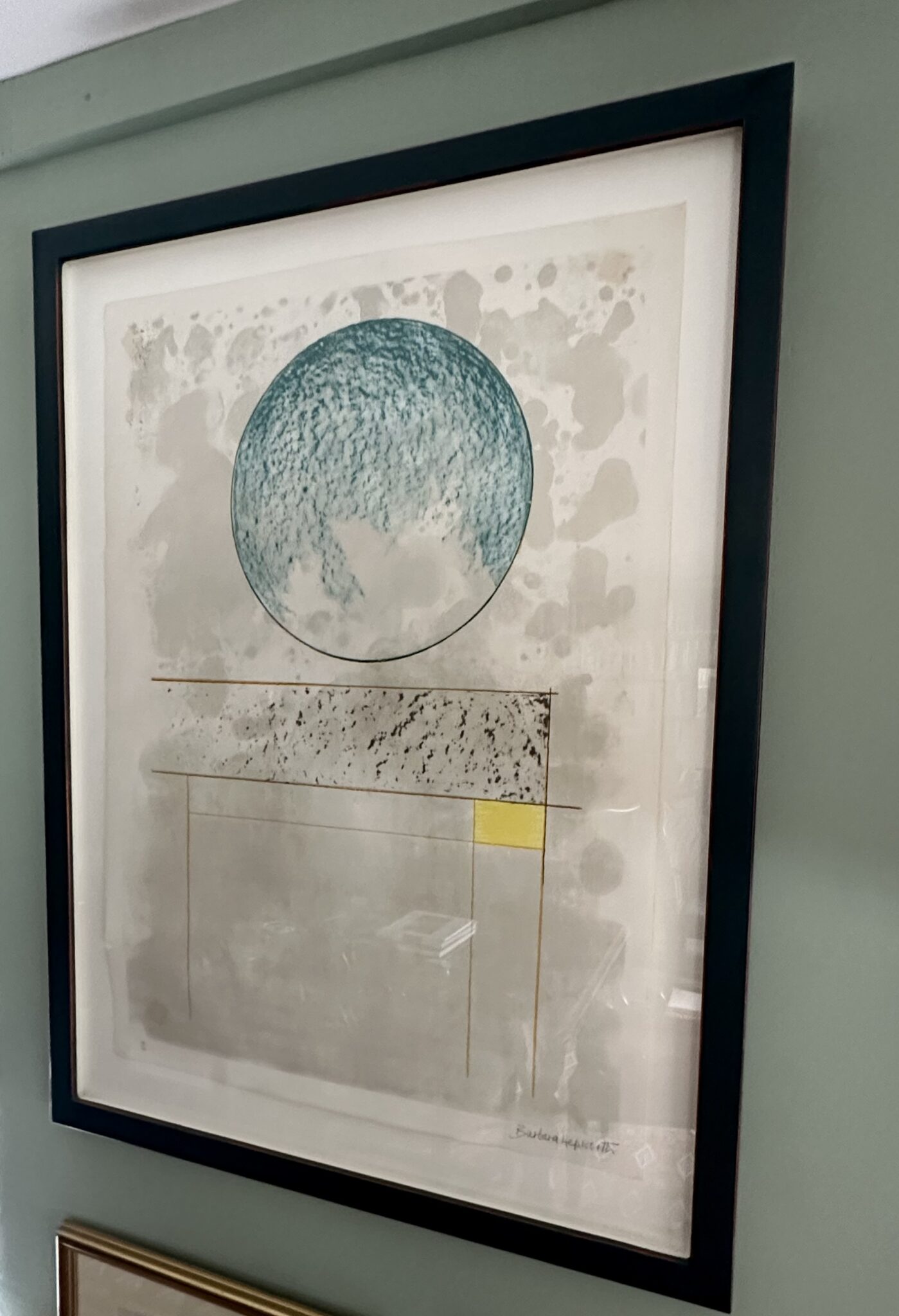
I turn now to the monumental legacy of Barbara Hepworth. In particular to one of her prints that I have kept. Sun Setting. Visitors to my study at Sarum College might be remember it. You may not be surprised to learn that in the liberating task of downsizing this Hepworth found a new home.
It continues to excite and stimulate and sooth. Finding the right spot for it was properly time consuming! Here is the image as it sat in my work space at Sarum.
I wonder where you might have come across Barbara Hepworth ? In an earlier blog https://www.jameswoodward.online/blog/art/the-invitation-to-be-surprised-art-that-touches-the-pulse/ I was able to connect with the first time I saw her work in Suffolk back in 1980 ! It was a piece of sculpture which still stands outside the Snape Maltings.
Hepworth is certainly better known for her sculpture. She carved a bridge between matter and meaning, between the earthly and the eternal. Though she wore no single religious label, her life’s work was animated by a profound spiritual hunger, a deeply personal theology of relationship, and a conviction that form itself could be a vessel for the sacred.
Hepworth’s art invites us into a way of seeing the world as sacrament: where stone speaks, space prays, and every curve bears witness to the unity of all things.
Born in Wakefield, West Yorkshire, Hepworth grew up within the rhythms of high-church Anglicanism, but her spirituality was always expansive. She read widely and in particular the poetry of Rilke and Kathleen Raine shaped her understanding of art as a path of awakening.
Hepworth found her first and enduring scripture in the landscape itself. The rolling hills of her childhood, and later the cliffs, coves, and ancient standing stones of Cornwall, became more than backdrop—they became teacher.
“Here, where people respect a stone in a field,” she wrote in 1943, “one gets the spiritual reaction of people to sculpture in its immediate effect”. Neolithic quoits and stone circles were ancestral acts of devotion, human hands shaping stone to stand in dialogue with sky and earth. Her sculpture entered into that same long conversation.
To carve away the literal was to reveal the universal.
Space as Presence
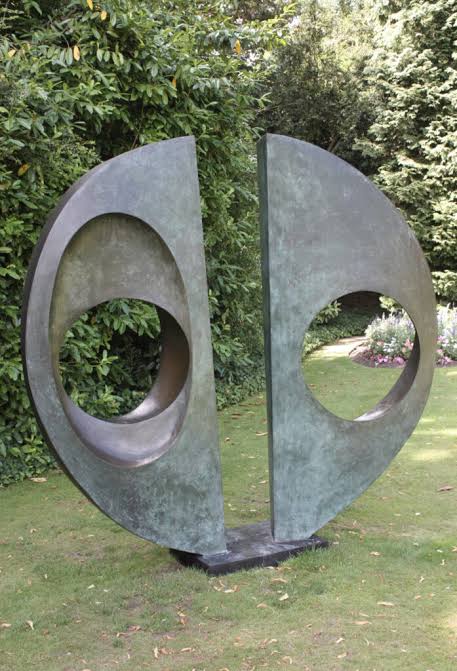
No innovation of Hepworth’s carries more spiritual weight than the pierced form—the hollow, the opening, the void at the heart of the solid. Where others saw emptiness, she saw potential. The hole was presence made visible: air, light, sky, the viewer’s own gaze passing through and being transformed.
This was a profoundly theological gesture. In Christian thought, God is often described as the unnameable, the ground beyond all form; in Hepworth’s work, the hollow space within the stone became just such a sanctuary. Her sculptures became metaphors for the hidden life within: the divine indwelling, the mystery that cannot be fully grasped but only held.
They echo the ancient paradox of the sacred—God both within and beyond, near and transcendent. As the light shifts through the aperture, the sculpture changes; the holy is never static, always encountered anew.
We need Art for our well being. In a world that might be ambivalent about some forms of religion and which has seethe steady decline of theology in the academy artists are a gift to us. Artists are visionaries, translators and quiet witnesses.