
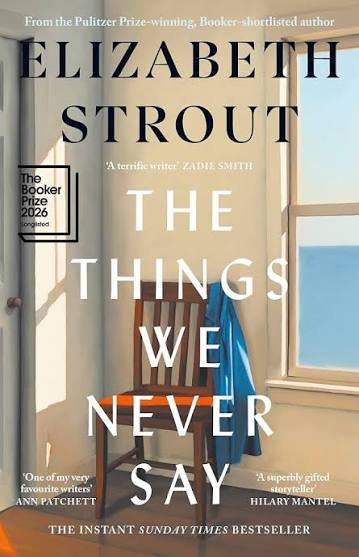
I remember exactly when I first entered Elizabeth Strout’s world: November 2020, with Olive Kitteridge, when ordinary life already felt newly fragile. Since then, her novels have not felt like books I merely read, but rooms I keep returning to — places where difficult, wounded, unshowy people are granted the dignity of being fully noticed.
That is Strout’s quiet miracle, and it gives The Things We Never Say its force. This new novel is about silence: not grand revelation, but the ordinary omissions that harden over time — regret, buried grief, old hurts, failures of courage, damage inflicted and endured. Strout makes those unsaid things feel intimate, dangerous and urgently human.
At the centre is Artie Dam, a 57-year-old high school history teacher who is funny, kind and beloved by his students. He is also quietly breaking. Outwardly, Artie has a fortunate life: a spacious home, weekends sailing, a long marriage to Evie. Yet he has never fully settled into the wealth he married into; his own home still feels like a place he is not entirely entitled to occupy.
The family’s fracture can be traced to a car accident ten years earlier. Artie’s son, Rob, was driving when his girlfriend was killed. Rob survived, but has lived ever since with a silence of his own. Evie, a family therapist, carries grief Artie cannot quite reach.
As a retired priest and teacher, I felt Artie keenly. Like him, I kept notes from people I have encountered over the years. They are proof, however fragile, that each of us can matter in someone’s life — though we may never know which moments mattered, or to whom.
Strout understands that strange intimacy. Artie’s box of notes is not sentimental decoration, but one of the novel’s clearest signs of his need to believe his life has had meaning.
She also sets Artie’s private bewilderment against a wider American unease: post-pandemic anxiety, a tightening political climate, and the recurring Strout question of how much of a life is chosen, and how much is shaped by accident, family, class and history.
The novel is driven less by plot than by accumulation — the small and not-so-small things left unsaid until they can no longer stay hidden. Nearly every character has something buried: grief, shame, longing, disappointment, love.For long-time readers, this new fictional world offers the deep human mystery that has always made Strout’s work feel alive. For newcomers, it is an elegant demonstration of her rare gift: to make ordinary lives feel inexhaustibly rich without pretending they are easily healed. The Things We Never Say is a sombre, generous novel — and its silences linger long after the final page