
At the end of June 2026 I am stepping out of full-time employment for what I want to call a new season. I’m hoping to reach that date, and although born in 1961, I will have completed 41 full and wonderful years of ordained ministry in the Church of England. Eleven of these years have been spent here at Sarum College.
A colleague kindly said that she hoped I would keep on doing book reviews. A recent review was presently being listened to on audiobooks while driving in the car. This took me off into the App Store and the tempting offer of a trial which I was persuaded to take up. The result is here and 3 1/2 hours of listening in four sessions this book read skilfully and carefully. I think I was pleasantly surprised by the experience and wasn’t too distracted by listening to it while driving.
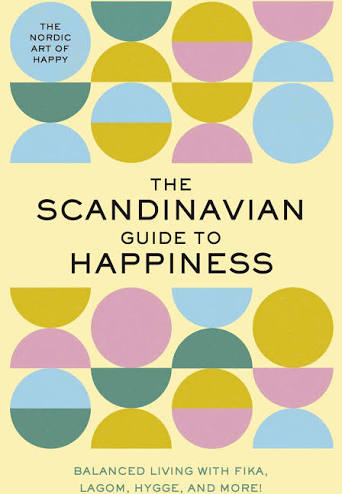
The book, heard or read tells us that there are many reasons why Finland, Denmark, Norway, Iceland, and Sweden consistently rank as the top 5 happiest countries on earth! There are no distracting chapters explaining the concept of happiness. It is a concept which is notoriously difficult given the complex relationship between the objective and subjective in all of our lives. In these chapters we are shown what the author believes to be some of the secrets to happiness and fulfillment.
Centuries of Nordic wisdom are broken open with these five concepts
– Lykke: Happiness is all around you (Denmark)
– Lagom: Just the right amount—not too much, not too little (Sweden)
– Fika: Taking daily coffee breaks and other comforting rituals (Sweden)
– Hygge: Coziness brings comfort, courage, and happiness (Denmark)
– Sisu: Everyday courage, grit, and determination & acting rationally in the face of adversity
There is a kind of happy glow that pervades these chapters all designed to put a happy glow onto our life. I began feeling sceptical and sometimes slightly weary of the ‘list like’ succession of suggestions but it’s a framework which did feel both inspiring and encouraging. It was not always easy to absorb. It is a book to return to. I was enchanted and challenged and informed an equal measure. Experimenting with coffee, getting into a rhythm of gentle exercise, safeguarding against over work, cooking for others are amongst the things that immediately bring to mind. As I listened, I wondered how something so complex could be made accessible and earthed.
Fruluftsliv, invites us to connect to nature by being in nature. The word literally means free-air-life. It reminded me of a teacher in a church school that I was connected with some years ago who regularly moved her class of children out of the building and into the gardens and sometimes into the woods which were quite close. She was convinced that we should seek to learn in different with nature being our teacher. I loved the way she invited her children to slow down, to breathe steadily and to notice what was around them with curiosity and attention. This was truly food for the soul.
Hygee, is another concept that spoke to the particular space of these last weeks at work. I’m conscious of the Need both of the tasks of the work but also my mode of working to move quickly between various roles, meetings and tasks. In this sense it is not always easy to hold together functionality and relationality. List of things to do become part of the desire to deliver and simply to get on with what happens to be on the desk at any particular moment..
Hygee has been called everything from ‘the art of creating intimacy,’ ‘coziness of the soul,’ and ‘the absence of annoyance,’ to ‘taking pleasure from the presence of soothing things,’. Challenging to imagine how this might translate itself into a working day of the culture of a place switch by its very nature is driven by tasks and functions. How do we create community or a space where people can connect both in and through themselves with others? This area of discussion in the book caused some strong response in wondering how it might land in some of the communities or workplace that have been part of my life and ministry over the last 40 years. A small part of me wondered whether I was simply too old to learn new tricks!
And for my colleagues at Sarum College I think there are some important questions and challenges about our shape and culture and community which would benefit from some of this Scandinavian thinking.
This new season perhaps invites me ( and others ) into a different space where new things and patterns of time and encounter might be recovered for happiness! Let’s see.
A good book and a good read or should I now say a good listen?
Thank you. Please go on sharing. You are not too old to learn new things… although I must admit learning to do one thing at a time and feel ‘worth it’ is a challenge for me! God speed.